Courage and Confidence Stories: A Practical Tool for Building Emotional Resilience in Children
For educators, parents, and caregivers, fostering emotional resilience in children is a foundational part of their development. Courage and Confidence Stories is a 50-page ebook designed to help young learners build self-belief, emotional awareness, and the courage to face challenges with confidence. This resource seamlessly integrates into broader educational or parenting workflows, offering actionable content that supports long-term growth.
Understanding the Role of Courage and Confidence Stories
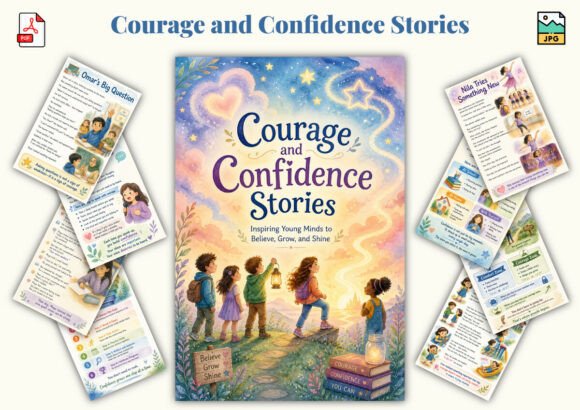
Courage and Confidence Stories is more than just a storybook—it's a structured learning tool that aligns with developmental milestones in emotional intelligence. Each page is crafted with a soft watercolor aesthetic and minimal layout to create an inviting experience for children. The content is carefully curated to guide kids through real-life scenarios where courage and confidence are essential, helping them understand how to apply these traits in their own lives.
This ebook fits naturally into various stages of a child’s learning journey. Whether used as a pre-lesson activity, a post-discussion reflection, or a standalone read, it complements traditional teaching methods by reinforcing key concepts through storytelling and interactive exercises.
How to Integrate Courage and Confidence Stories into Daily Routines
Incorporating Courage and Confidence Stories into daily routines can be done in several ways. For instance, it can serve as a morning routine element, helping children start the day with a positive mindset. Parents or teachers might read a short story together, followed by a reflection exercise to encourage deeper thinking about the character’s choices and emotions.
Alternatively, it can be used during specific life events such as starting school, moving to a new home, or facing a challenge at school. In these moments, the stories become relevant tools that help children process change and develop coping strategies.
- Before a task: Use a story to set the tone and inspire confidence before a challenging activity, like a presentation or a team project.
- During a lesson: Pair a story with a discussion or worksheet to reinforce the theme of courage and confidence.
- After a challenge: Reflect on the story to help children analyze their own experiences and identify ways to build resilience.
Complementary Tools and Resources
Courage and Confidence Stories works well alongside other educational resources, including social-emotional learning (SEL) curricula, mindfulness practices, and creative writing activities. Its reflection pages and worksheets provide a natural bridge between storytelling and hands-on learning, making it easy to integrate into existing lesson plans or family routines.
Teachers may pair the ebook with digital platforms like Seesaw or Google Classroom to assign reflections or action plans digitally. Parents can use the printable worksheets to create personalized journals for their children, tracking progress over time and reinforcing key lessons.
Workflow Integration for Educators
Educators can streamline their workflow by using Courage and Confidence Stories as a weekly module within their SEL curriculum. Here’s a sample integration:
- Monday: Read a story and discuss the main themes.
- Tuesday: Complete a reflection worksheet to explore personal connections.
- Wednesday: Use a confidence-building exercise from the ebook as a group activity.
- Thursday: Assign a creative writing prompt based on the story.
- Friday: Review the week’s content and share insights with peers.
This approach ensures consistent engagement while allowing flexibility to adapt the material to classroom needs.
Workflow Integration for Parents
Parents can use Courage and Confidence Stories as part of a nightly routine or during weekends. For example, reading a story before bedtime can be a calming ritual that promotes emotional reflection. Follow-up activities such as journaling or drawing can be done independently or together, encouraging open conversations about feelings and bravery.
Additionally, the ebook’s action plans can be used to set small, achievable goals for children, such as trying something new or standing up for a friend. These goals can be reviewed periodically to track progress and celebrate successes.
Practical Tips for Implementation
To ensure effective implementation, consider the following tips:
- Choose the right timing: Use the ebook when children are emotionally ready to engage with the material. Avoid overwhelming them with too much content at once.
- Be consistent: Regular use helps reinforce the lessons and builds lasting habits around self-awareness and resilience.
- Encourage participation: Let children choose which stories they want to read or reflect on, increasing their investment in the process.
- Track progress: Use the reflection pages to monitor how children respond to the content and adjust future activities accordingly.
These practical steps ensure that Courage and Confidence Stories becomes a meaningful and sustainable part of a child’s development journey.
Long-Term Benefits and Usability
The long-term benefits of using Courage and Confidence Stories extend beyond immediate emotional support. As children grow, they carry the lessons learned from these stories into adulthood, developing a strong sense of self-worth and problem-solving skills. The ebook’s design—print-ready PDF format and high-quality JPGs—makes it accessible for both digital and physical use, ensuring its usability across different environments and age groups.
Its compatibility with various educational and parenting workflows makes it a versatile resource. Whether used in classrooms, homes, or therapeutic settings, Courage and Confidence Stories provides a consistent framework for nurturing emotional resilience in children.
By integrating this ebook into broader developmental processes, adults can help children build the confidence and courage needed to navigate life’s challenges with grace and strength.