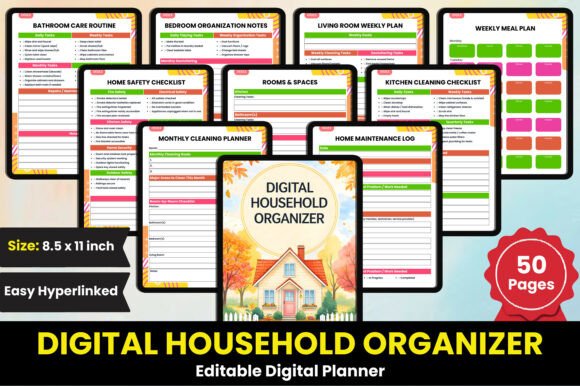
Digital Household Organizer: Streamline Your Home Life with Customizable Tools
Managing a household can feel overwhelming, especially when juggling daily tasks, weekly routines, and long-term planning. A Digital Household Organizer offers a practical solution by consolidating all your home-related responsibilities into one centralized system. Whether you're a busy professional, a stay-at-home parent, or someone new to managing a household, this tool provides flexibility, clarity, and efficiency. What makes it stand out is its ability to be edited easily using platforms like Canva, along with access to high-quality downloadable formats such as PDF, JPEG, and PNG.
The best part? You don't need to be a tech expert to use it. With intuitive design and customizable templates, you can tailor the organizer to suit your unique lifestyle. Let’s explore what this tool includes and how to make the most of it without falling into common pitfalls.
What Is a Digital Household Organizer?
A Digital Household Organizer is essentially a virtual planner that helps you manage various aspects of home life. It includes everything from meal planning and cleaning schedules to home maintenance logs and habit tracking. Unlike traditional paper planners, digital versions offer the advantage of being editable, shareable, and accessible on multiple devices.
Many people are drawn to this tool because it simplifies complex routines. For example, instead of flipping through pages of a physical planner, you can quickly navigate between sections like “Weekly Meal Plan” or “Monthly Cleaning Planner.” This kind of accessibility ensures that you stay on top of your commitments without wasting time searching for information.
Common Mistakes When Using a Digital Household Organizer
While the benefits are clear, there are some common mistakes that users often make. One of the most frequent errors is not taking the time to customize the template properly. Many people download a pre-made organizer and use it as-is, which may not align with their specific needs. For instance, if you have a large family, a generic Meal Planner might not account for dietary restrictions or meal preferences.
Mistake: Assuming that one-size-fits-all templates will work for everyone.
Better Approach: Take the time to edit and personalize the content. Use tools like Canva to adjust text, add notes, or rearrange sections based on your lifestyle. This ensures that the organizer becomes a true reflection of your daily routine rather than a generic guide.
Another mistake is neglecting to update the organizer regularly. A static planner that doesn’t change with your schedule can become outdated quickly. If you skip updating your Weekly Cleaning Schedule or forget to add a new task in the Home Maintenance Log, you risk missing important deadlines or responsibilities.
Mistake: Treating the organizer as a passive document rather than an active tool.
Better Approach: Make it a habit to review and update your organizer weekly. Set reminders or integrate it with other apps (like Google Calendar) to ensure that nothing falls through the cracks.
Key Features to Look For
When choosing a Digital Household Organizer, it's essential to evaluate the features that matter most to you. Some of the most useful components include:
- Index: A table of contents that allows you to jump directly to the section you need, such as “Daily Cleaning Checklist” or “Garden Outdoor Care.”
- Meal Planner: Helps you plan meals for the week, track grocery lists, and avoid last-minute food shopping.
- Home Care Schedules: From Monday to Sunday, these sections break down daily tasks, making it easier to maintain consistency.
- Cleaning Checklists: Whether it's a Kitchen Cleaning Checklist or Bathroom Care Routine, having detailed lists ensures that no area of your home is neglected.
- Room-by-Room Planning: This feature allows you to organize each space in your home, including the Living Room Weekly Plan or Bedroom Organization Notes.
- Home Essentials Inventory: Keeps track of items like cleaning supplies, gardening equipment, and emergency kits.
- Goal Tracker & Habit Tracker: These tools help you build consistent habits and monitor progress toward personal or household goals.
Before downloading any template, check whether it includes the features you need. If you’re planning a vacation, look for a Vacation Planner section. If you’re preparing for a move, a Packing List and Garden Equipment List could be invaluable.
Why Choose Editable Formats?
One of the greatest advantages of a Digital Household Organizer is its editability. Most templates come in formats like PDF, JPEG, and PNG, which allow you to make changes without losing quality. Platforms like Canva provide user-friendly editing tools that let you customize fonts, colors, and layouts effortlessly.
Mistake: Downloading a non-editable file and struggling to make changes.
Better Approach: Always confirm that the template you choose is editable. If you're unsure, test it out before committing to a full download. Many free Canva accounts offer enough functionality to make minor adjustments without needing a premium subscription.
Additionally, consider how you’ll use the files. If you plan to print them for reference, ensure that the resolution is high enough to maintain clarity. If you’ll be sharing them digitally, opt for formats that are compatible with your devices and preferred software.
Maximizing Your Experience with a Digital Household Organizer
To get the most out of your Digital Household Organizer, treat it as a living document that evolves with your needs. Start by filling out the most relevant sections first, such as your Daily Cleaning and Meal Planner. As you become more comfortable, gradually add more sections like Home Safety Checklist or Income Tracker.
Don’t hesitate to experiment with different layouts or color schemes to keep the organizer visually appealing. A well-designed planner can motivate you to stay organized and on task. Also, consider setting up a routine where you review your planner at least once a week to ensure that all tasks are up to date.
If you’re unsure where to start, begin with small steps. Focus on one room or one type of task at a time. Over time, you'll build a comprehensive system that supports your entire household.
Finally, remember that the goal of a Digital Household Organizer isn’t perfection—it’s progress. By using it consistently and making adjustments as needed, you’ll find that managing your home becomes less of a chore and more of a structured, rewarding process.