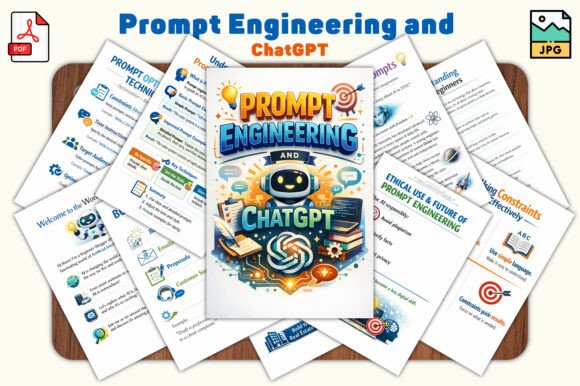
Prompt Engineering and ChatGPT Master the Skill of Communicating with AI Like a Pro
Have you ever asked ChatGPT a question and got an answer that felt off-track or incomplete? You're not alone. Many users struggle to get the most out of AI tools like ChatGPT because they don't know how to ask the right questions. This is where Prompt Engineering comes in—a skill that unlocks the full potential of AI by helping you communicate more effectively. Whether you're writing content, coding, learning new skills, or running a business, mastering prompt engineering can transform how you work with AI.
What Is Prompt Engineering and Why Does It Matter?
Prompt engineering is the art of crafting questions or instructions that guide AI models like ChatGPT to produce accurate, relevant, and useful responses. It's not just about typing a query—it's about understanding how AI processes language, what it needs to function well, and how to shape your requests to get the best results.
Think of it like teaching someone a new language. If you want them to understand you clearly, you need to use the right words, structure your sentences properly, and provide context when needed. The same applies to AI. By learning prompt engineering, you're essentially learning how to "speak" the language of AI so that you can get smarter, more precise answers every time.
How ChatGPT Understands and Generates Responses
ChatGPT is a large language model trained on vast amounts of text data. It doesn’t “think” like humans do, but it has learned patterns in language and uses those patterns to generate responses. When you input a prompt, ChatGPT analyzes it, identifies key elements, and then generates a response based on its training data.
The quality of the output depends heavily on the clarity and specificity of the prompt. A vague request like "Write something about AI" will likely result in a generic, unhelpful response. But a well-crafted prompt like "Explain the ethical implications of AI in healthcare, focusing on patient privacy and data security" gives ChatGPT clear direction and context, leading to a much more insightful answer.
Real-World Scenarios Where Prompt Engineering Shines
Prompt engineering isn't just for tech experts or AI enthusiasts. It's a practical skill that can benefit people from all walks of life. Here are some real-world situations where it makes a difference:
- Content Creation: Writers and bloggers can use prompt engineering to generate article ideas, draft outlines, or even write entire posts. For example, a prompt like "Write a 500-word blog post on the benefits of remote work, including statistics and expert opinions" can help create high-quality content quickly.
- Learning and Education: Students can leverage prompt engineering to get personalized explanations, practice problems, or study guides. A prompt like "Explain quantum physics in simple terms, as if I'm a high school student" ensures the information is easy to understand.
- Coding and Development: Developers can use prompts to debug code, explain complex algorithms, or generate sample code. A prompt such as "Fix this Python script that's throwing a syntax error" helps ChatGPT identify and resolve issues efficiently.
- Business and Productivity: Entrepreneurs and professionals can use prompts to brainstorm ideas, draft emails, or analyze market trends. A prompt like "Create a marketing plan for a new fitness app targeting young adults" can save hours of planning time.
Types of Prompts and How to Use Them Effectively
There are different types of prompts, each designed for specific purposes. Understanding these can help you tailor your requests to get the best results:
- Simple Prompts: These are straightforward questions or statements that ask for direct information. Example: "What is the capital of France?"
- Role-Based Prompts: These assign a role to the AI, such as a teacher, writer, or consultant. Example: "Act as a personal finance advisor and explain how to create a budget."
- Creative Prompts: These encourage creativity and imagination. Example: "Write a short story set in a futuristic city where robots have taken over."
- Business Prompts: These are tailored for professional settings, such as generating reports, analyzing data, or creating strategies. Example: "Analyze the latest sales report and suggest ways to improve customer retention."
Each type of prompt requires a slightly different approach. Role-based prompts, for instance, should clearly define the AI's role and expectations. Creative prompts should provide enough context to spark imagination while staying within the user's vision.
Common Mistakes to Avoid When Prompting AI
Even the best AI tools can fail if the prompts aren't crafted carefully. Here are some common mistakes to avoid:
- Vague Requests: Instead of saying "Tell me about AI," specify what you want to know. Try "Explain the history of artificial intelligence from its origins to today."
- Lack of Context: Provide background information when necessary. For example, "I'm writing a research paper on climate change. Help me find three recent studies on renewable energy adoption."
- Overloading the Prompt: Keep your requests focused. A prompt that asks for multiple things at once can confuse the AI. Break it down into smaller, specific tasks.
- Ignoring Ethical Considerations: Always be mindful of how AI is used. Avoid asking for harmful or unethical content, and ensure your prompts respect intellectual property and privacy laws.
Practical Examples of Prompt Engineering in Action
To see how prompt engineering works in practice, let’s look at a few examples across different industries:
Example 1: Content Writing
Prompt: "Write a 700-word article on the benefits of meditation for mental health, including scientific studies and practical tips."
Result: A well-structured article with references to recent research and actionable advice for readers.
Example 2: Learning New Skills
Prompt: "Teach me how to cook Italian pasta dishes, step-by-step, using simple ingredients found at a local grocery store."
Result: A detailed recipe guide with ingredient lists, cooking times, and helpful tips for beginners.
Example 3: Business Strategy
Prompt: "Analyze our company's social media performance over the past six months and suggest improvements for increasing engagement."
Result: A comprehensive analysis with data insights and actionable recommendations for boosting online presence.
Example 4: Coding Help
Prompt: "Debug this JavaScript code that's causing an error in the console. Please explain the issue and provide a corrected version."
Result: A clear explanation of the bug and a revised code snippet that fixes the problem.
Ethical Use and Limitations of AI
While AI tools like ChatGPT offer incredible benefits, it's important to use them responsibly. Here are some key considerations:
- Accuracy: AI can sometimes provide incorrect or outdated information. Always verify facts from reliable sources before relying on AI-generated content.
- Privacy: Be cautious about sharing sensitive or personal information with AI tools. Never input confidential data unless you're certain it's safe to do so.
- Bias: AI models can reflect biases present in their training data. Be aware of this and critically evaluate AI-generated content, especially in areas like hiring, legal matters, or medical advice.
- Intellectual Property: AI-generated content may raise copyright concerns. Always check the terms of service and ensure you're using AI outputs in a way that respects intellectual property rights.
By being mindful of these limitations, you can use AI more effectively and responsibly, ensuring that it enhances your work without compromising ethics or accuracy.
Advanced Prompt Techniques for Better Control and Results
Once you've mastered the basics of prompt engineering, you can take your skills to the next level with advanced techniques:
- Chain of Thought Prompting: This involves breaking down a complex task into smaller steps and guiding the AI through each one. Example: "First, outline the main points of the topic. Then, expand each point into a paragraph. Finally, review the content for clarity and coherence."
- Iterative Refinement: Start with a basic prompt and refine it based on the AI's response. If the first answer isn't perfect, ask for clarifications or additional details.
- Zero-Shot Prompting: This technique allows the AI to perform a task it hasn't been explicitly trained on by providing clear instructions and examples. Example: "Write a poem in the style of Shakespeare about modern technology."
These advanced techniques give you greater control over the AI's output, allowing you to achieve more precise and customized results.