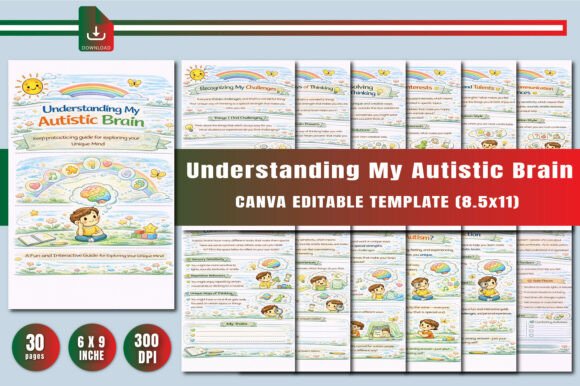
Understanding My Autistic Brain: A Workbook for Self-Awareness and Empowerment
Understanding My Autistic Brain is a comprehensive and engaging 30-page workbook designed to help individuals on the autism spectrum explore their unique brain, strengths, challenges, and emotional experiences. This workbook combines educational content with interactive activities to foster self-awareness, build coping strategies, and promote emotional growth. Perfect for kids and young adults, this workbook encourages a positive and empowering approach to understanding autism and embracing individuality.
What’s Inside Understanding My Autistic Brain
The workbook is structured around three main sections that guide users through a journey of self-exploration, reflection, and practical application. Each section is carefully crafted to support individuals in gaining deeper insights into their experiences and developing tools for everyday life.
1. Self-Exploration and Personal Growth
The first section focuses on building foundational knowledge about autism and how it affects the brain. It includes simple, clear explanations that are accessible to readers of all ages. This part of the workbook also emphasizes identifying personal strengths and recognizing challenges related to sensory sensitivities, social interactions, and communication.
- Understanding Autism: Provides an overview of autism and its impact on cognitive and sensory processing.
- Identifying Strengths: Offers activities to help users recognize their unique talents and abilities.
- Recognizing Challenges: Helps users identify areas where they may face difficulties and understand how these challenges can be managed.
This section is particularly useful when beginning a new project or task, as it allows individuals to assess their own needs and capabilities before moving forward. For example, someone planning a career change might use this section to evaluate how their strengths and challenges align with potential roles.
2. Empowering Activities and Reflection
The second section of the workbook contains a variety of interactive exercises designed to encourage self-reflection and emotional growth. These activities are not only engaging but also provide valuable insights that can be applied in various contexts.
- Interactive Exercises: Includes activities like the “Sensory Sensitivities Checklist,” “Social Skills Reflection,” and “My Unique Strengths.” These exercises are designed to be completed at different times and can be revisited as needed.
- Reflection Pages: Provide space for individuals to reflect on their emotional experiences, growth, and goals. These pages are ideal for tracking progress over time and setting personal development objectives.
These activities can be integrated into daily routines or used during specific projects. For instance, a student preparing for exams could use the reflection pages to track study habits and emotional well-being. Similarly, a professional working on a team project might use the social skills reflection activity to improve communication and collaboration with colleagues.
3. Coping Strategies and Practical Tips
The third section of the workbook offers practical advice on managing common challenges associated with autism. It provides tools and strategies for coping with sensory overload, anxiety, and stress, making it a valuable resource for anyone looking to improve their quality of life.
- Self-Regulation Tools: Includes techniques for managing sensory overload, anxiety, and stress. These tools can be used in real-time situations or incorporated into regular routines for long-term benefits.
- Social Tips: Offers strategies for navigating social interactions and building relationships. These tips are especially useful in both personal and professional settings.
The coping strategies provided in this section can be implemented alongside other resources and methods. For example, someone using mindfulness apps might find that combining them with the self-regulation tools from the workbook enhances their effectiveness. Similarly, professionals involved in workplace training programs might incorporate the social tips into team-building activities.
Integrating Understanding My Autistic Brain Into Daily Workflows
Understanding My Autistic Brain is not just a standalone tool; it can be seamlessly integrated into various workflows and processes. Whether you're a student, a professional, or someone exploring personal development, this workbook can be a valuable addition to your routine.
For students, the workbook can be used as part of a broader learning plan. It can be introduced at the start of a new academic year to help students better understand themselves and develop effective study habits. The reflection pages can be used periodically to assess progress and adjust strategies as needed.
Professionals can benefit from integrating the workbook into their personal development plans. For instance, a manager looking to improve team dynamics might use the social skills reflection activity to gain insights into their own communication style and how it impacts others. The coping strategies can be particularly useful in high-stress environments, helping individuals manage anxiety and maintain focus.
Entrepreneurs and business owners can also find value in using the workbook to enhance self-awareness and leadership skills. Understanding one's strengths and challenges can lead to more effective decision-making and better team management. The reflection pages can be used to track progress in business goals and personal growth initiatives.
Practical Implementation Tips
To get the most out of Understanding My Autistic Brain, it's important to approach it with consistency and intentionality. Here are some practical implementation tips to consider:
- Set a Routine: Dedicate a specific time each week to work through the workbook. This helps ensure that the activities are completed regularly and consistently.
- Use Digital Tools: Consider using digital tools such as note-taking apps or spreadsheets to track progress and organize reflections. This makes it easier to revisit previous entries and monitor changes over time.
- Combine with Other Resources: Use the workbook alongside other resources such as therapy sessions, support groups, or online courses. This creates a well-rounded approach to self-awareness and personal growth.
- Adjust Based on Needs: Tailor the activities to fit your specific needs and circumstances. Not every exercise will be relevant to everyone, so feel free to skip or modify activities as needed.
By following these tips, individuals can create a personalized plan that maximizes the benefits of the workbook while minimizing any potential barriers to success.
Understanding My Autistic Brain is more than just a workbook; it's a powerful tool for fostering self-awareness, building coping strategies, and promoting emotional growth. Whether you're a student, a professional, or someone exploring personal development, this workbook can be a valuable asset in your journey toward greater understanding and empowerment.